
Husky Air Compressor Models
Husky air compressor models cover a wide range of sizes and configurations for home garages, workshops, automotive work, construction, and DIY projects. This category includes portable and stationary compressors with different tank sizes, motor ratings, pump designs, and air output.
Husky compressors are sold through The Home Depot, and the product range includes models made for both occasional home use and more demanding workshop applications. The correct model depends mainly on the tools you plan to run and how often you use them.
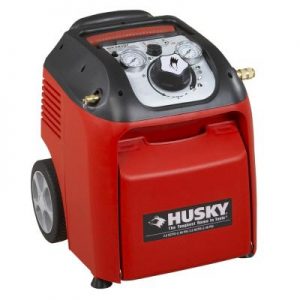
Husky 1.5 gallon Air Scout Compressor
Husky 1.5 gallon air compressor is very compact but surprisingly powerful air compressor, which can do a lot different tasks…
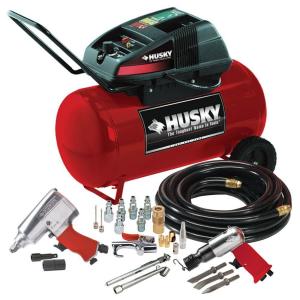
Husky 13 Gallon Air Compressor + Kit, WL651999AJ – Discontinued
The Husky 13 gallon air compressor and a bonus package is the perfect assistant at any house, shop or garage….
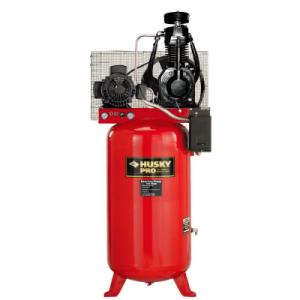
Husky 7.5 HP, 80 Gallon Two Stage Air Compressor w/Magnetic Starter
This Husky air compressor is made of steel with a cast iron oil pump, which together make this compressor is…
Husky Air Compressor Sizes
Husky air compressors are available with different tank capacities. Common sizes include 1-gallon, 2-gallon, 4-gallon, 4.5-gallon, 6-gallon, 8-gallon, 20-gallon, 27-gallon, and 30-gallon models, although availability varies by model and year.
Tank size is not the same as air output. A larger tank stores more compressed air, but the compressor’s CFM rating determines how much air the pump can deliver over time.
Small tanks are useful for short jobs such as tire inflation, blow cleaning, and nailers. Larger tanks provide more stored air for intermittent use and are more common on garage and workshop compressors.
CFM and PSI
CFM is one of the most important specifications when comparing Husky compressors. It indicates the volume of air the compressor can deliver.
Compare the compressor’s CFM with the air requirement of your tool at the same pressure. Many pneumatic tools list their requirements at 90 PSI, so comparing CFM at 90 PSI gives a more useful comparison than looking only at horsepower.
PSI indicates the maximum pressure the compressor can produce. Many common air tools operate around 90 PSI, while some applications require higher pressure.
A compressor with a higher maximum PSI is not automatically better. The compressor should provide enough CFM for the tools you actually plan to use.
Portable and Stationary Models
Husky portable compressors are designed to be moved between work areas. Smaller models can be carried by hand, while larger portable units may use wheels and handles.
Stationary models are intended to remain in one location. They generally have larger tanks and are suited to garages and workshops where compressed air is used regularly.
When comparing models, consider the compressor’s weight, dimensions, tank size, CFM, voltage, and power requirements along with the type of tools you will use.
Oil-Free and Oil-Lubricated Compressors
Not sure which pump type is right for you? See our guide to [Oil-Free vs. Oil-Lubricated Air Compressors] to compare the differences, maintenance requirements, and typical uses.
Husky compressors can use different pump designs, including oil-free and oil-lubricated systems.
Oil-free pumps do not require pump oil changes and can be convenient for basic home and DIY applications. Oil-lubricated pumps use oil to reduce friction inside the pump and require regular oil maintenance.
The pump type can affect maintenance requirements, noise, operating characteristics, and the intended use of the compressor.
Common Uses for Husky Compressors
Depending on the model, Husky air compressors can be used for:
- Tire inflation
- Blow guns and cleaning
- Brad and finish nailers
- Framing nailers
- Staplers
- Impact wrenches
- Air ratchets
- Pneumatic drills
- Die grinders
- Sanders
- Spray guns
- Automotive repairs
- General workshop projects
High-demand tools such as grinders, sanders, and spray guns usually require more continuous CFM than nailers or impact wrenches. Always check the air requirement of the specific tool before selecting a compressor.
How to Choose a Husky Air Compressor
Start with the tools you plan to use. Find the highest CFM requirement and compare it with the compressor’s CFM at the required PSI. Then consider tank capacity, portability, available electrical power, noise level, physical size, and how often the compressor will run.
Browse the Husky air compressor models in this category to compare tank size, CFM, PSI, motor size, pump type, voltage, dimensions, and other specifications. This makes it easier to find a Husky compressor that matches your garage, workshop, automotive, or DIY needs.