
Stationary Air Compressors
Stationary air compressors are built for permanent installation in a garage, workshop, or other work area. Unlike portable compressors, they are designed to stay in one location and connect to a fixed air supply system. Husky stationary air compressors are available with larger tanks and higher air output for automotive work, shop tools, and other applications that need more compressed air.
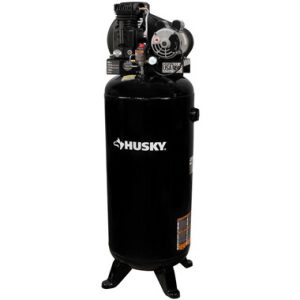
Husky 60 Gallon Air Compressor, Stationary – C602H
Husky 60 gallon air compressor C602H is the one of the latest 60 gal air compressor by Husky at the…
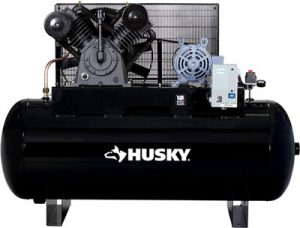
Husky 120 Gallon Air Compressor, Stationary – HH9919910
Husky 120 gallon air compressor is the biggest Husky air compressor which was ever made by them. As this is…
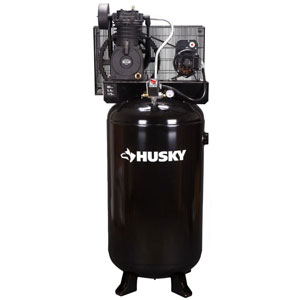
Husky 80 gallon Air Compressor – C802H – 3 Cylinder, 2 Stage
Husky company produces several types of the high-end air compressors, for those who need constant uninterrupted operation of air tools…
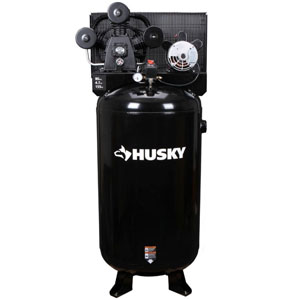
Husky 80 gallon Air Compressor – C801H – 3 Cylinder, Single Stage
Husky 80 gallon air compressor is one of the most powerful air compressors which are manufactured by Husky. This compressor…
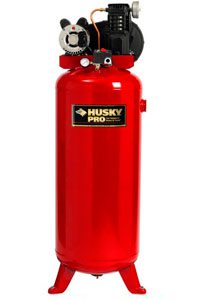
Husky 60 Gallon Air Compressor
Husky 60 gallon Air Compressor is perfect to perform most of your tasks. It has a big 60 gal tank…
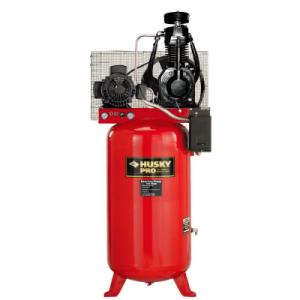
Husky 7.5 HP, 80 Gallon Two Stage Air Compressor w/Magnetic Starter
This Husky air compressor is made of steel with a cast iron oil pump, which together make this compressor is…
What Is a Stationary Air Compressor?
A stationary compressor typically has a larger tank, higher CFM output, and a larger motor than a small portable compressor. The tank stores compressed air, while the pump refills it when pressure drops.
Stationary models are useful when you use pneumatic tools regularly and do not need to move the compressor. They can be connected to an air hose or, in a workshop, to a fixed piping system with multiple air outlets.
Because these compressors are heavier and larger, they should be installed on a suitable, level surface with enough clearance around the unit for cooling and maintenance.
CFM Is More Important Than Tank Size
When choosing a stationary air compressor, start with CFM rather than gallons.
CFM measures the amount of air the compressor can deliver. Continuous-use tools such as grinders, sanders, die grinders, and spray guns can require a high and steady airflow. The compressor should provide enough CFM at the operating pressure required by the tool.
For example, a tool rated at 10 CFM at 90 PSI needs a compressor capable of delivering at least that amount of air at the same pressure. A safety margin is useful because running a compressor continuously at its maximum output can cause frequent cycling.
Tank size affects stored air capacity, but it does not increase the pump’s actual CFM output.
Choosing the Right Tank Size
Stationary compressors are commonly available with larger tanks than small portable models. A larger tank provides more stored air and can reduce how often the motor starts during intermittent use.
Tank size is especially useful when a tool has short periods of high air demand. However, a large tank will eventually empty if the compressor cannot keep up with a continuous-use tool.
For regular automotive and workshop use, consider the tools you use most often, their CFM requirements, and how long they normally run before choosing a tank size.
Single-Stage vs. Two-Stage Compressors
Stationary compressors can use either single-stage or two-stage pumps.
A single-stage pump compresses air directly to the final tank pressure. These compressors are suitable for many home garages and general workshop applications.
A two-stage pump compresses the air in two steps. Air is first compressed to an intermediate pressure and then compressed again before entering the tank. Two-stage designs are commonly used for higher-pressure and heavier-duty applications.
Electric Requirements
A larger stationary compressor may require more electrical power than a typical portable model. Some models operate on 120 volts, while larger units may require 240 volts.
Check the compressor’s voltage and amperage requirements before installation. A dedicated circuit may be required, especially for larger motors. Do not assume that a standard garage outlet can safely power every stationary compressor.
Common Uses
Stationary air compressors can power a wide range of pneumatic equipment, including:
- Impact wrenches
- Air ratchets
- Pneumatic drills
- Die grinders
- Angle grinders
- Sanders
- Spray guns
- Nailers and staplers
- Blow guns
- Tire inflators
- Automotive service tools
The compressor’s CFM should match the requirements of the tool. High-demand tools such as grinders, sanders, and spray guns generally need more continuous airflow than impact wrenches or nailers.
Installation and Maintenance
A stationary compressor needs adequate ventilation and clearance around the pump and motor. Keep the intake area clean and follow the manufacturer’s maintenance schedule.
Common maintenance tasks include draining tank moisture, checking air filters, inspecting hoses and fittings, and changing pump oil when required. Oil-lubricated pumps need regular oil checks and changes. The tank should also be drained regularly to reduce moisture and corrosion inside the tank.
Browse the Husky stationary air compressors in this category to compare tank capacity, CFM, PSI, motor size, voltage, pump type, and dimensions. Choose the model based on your tools’ air requirements, available electrical service, and the amount of compressed air you need for your garage or workshop.